
People. Planet. Pay. Do it Fair.
Around the world, the people who grow, pick, stitch and make the things we buy are facing the same challenges: unfair pay, unsafe working conditions, and a climate crisis threatening their livelihoods. Fairtrade exists to change this, and to push for the rules that make fairness the norm, not the exception.
The Fairtrade Foundation is part of a global Fairtrade system. We work to change the terms of trade through our certification, campaigns, policy work, and business partnerships. That includes working to secure fairer prices, safer working conditions, and more power in the hands of farmers and workers.
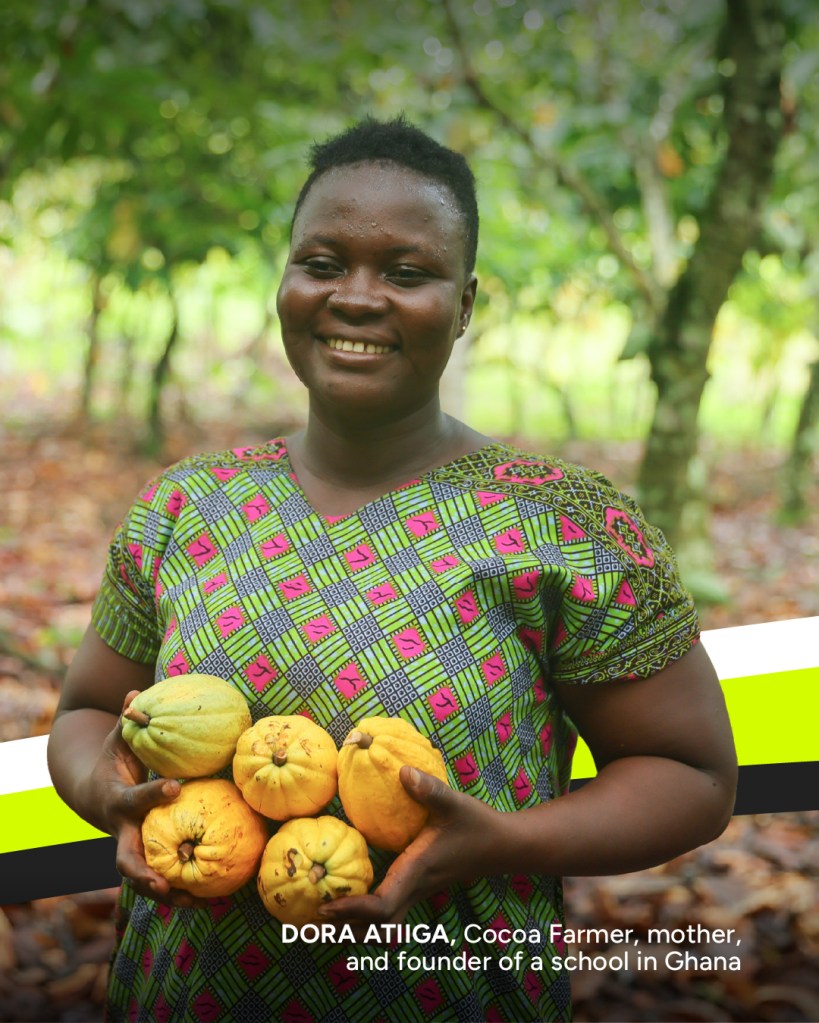
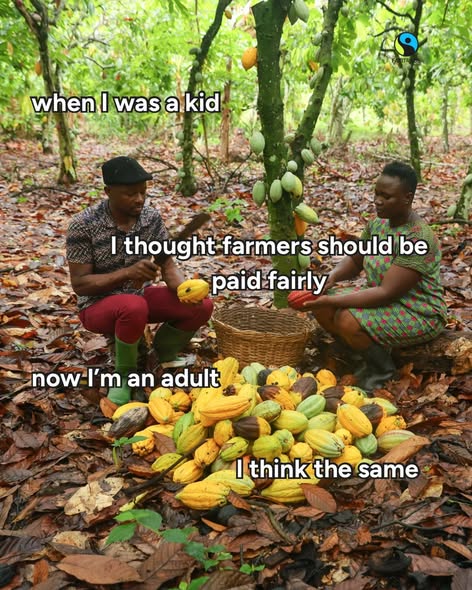
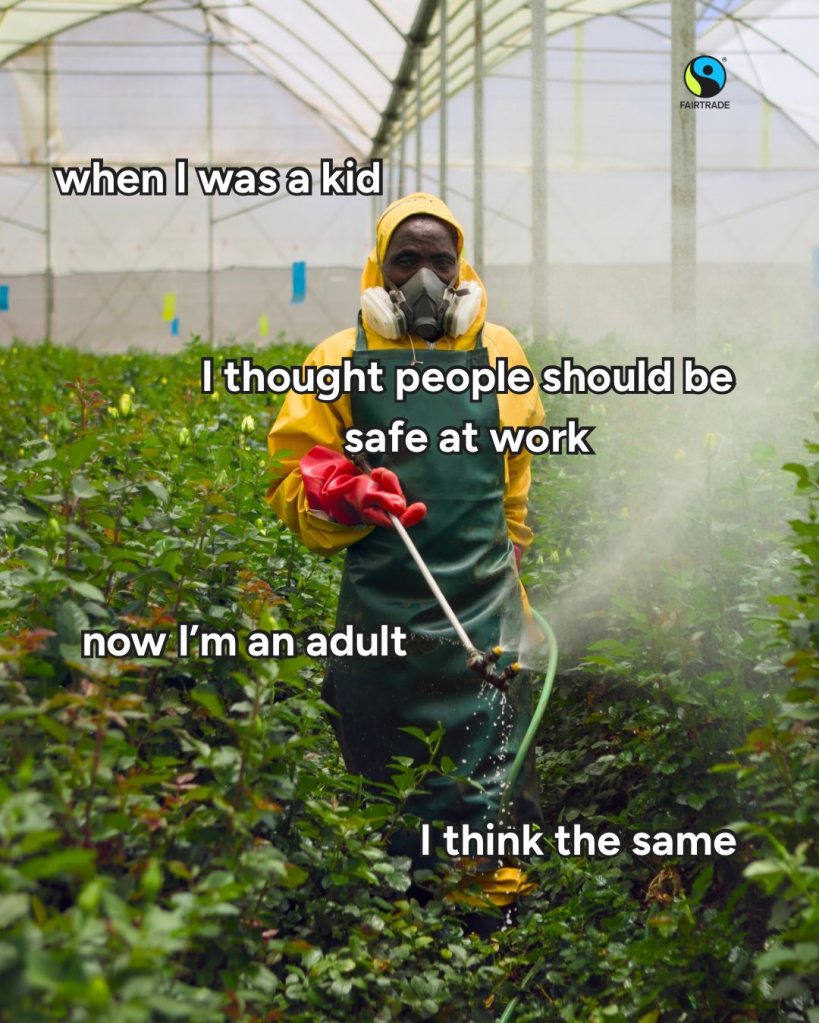
When we listen to producers and farmers, what we hear is clear, fairness breaks down in three key places:
People-rights and safety at work
Planet-protecting the land producers depend on
Pay-earning enough to live well andplan for the future
That’swhy our 2026 focus is simple:People. Planet. Pay. Do it Fair.


Fairtrade is campaigning for governments to demand better from business, so people’s rights are protected everywhere, not just where companies choose to act.
The products we love are under threat – and so are producers’ livelihoods. The climate crisis is making it harder to grow everyday crops like cocoa and coffee. Farmers are dealing with unpredictable weather, failing harvests, and rising costs, often without the support they need. Protecting the planet means protecting the people who depend on it.
What is a Business, Human Rights and Environment act?
It would require companies to prevent harm before it happens – helping ensure that products sold in the UK are free from exploitation and abuse.
A similar law was passed in the EU in 2024, and individual European countries like France, Germany and Norway have laws that require some level of human rights due diligence. The UK needs to follow suit.
Together, we can build a future where:
Companies take responsibility for their actions
Workers can speak out without fear
The stories behind our products are stories of fairness and safety
Why Now?
This is a huge and once-in-a decade opportunity, as a new law is currently being debated in Parliament. Showing the Government that communities up and down the country are calling for change is crucial
Demand businessthat’sfair to people and planet.
Sign the petition
Together, we can demand rules that make every business take responsibility. Together, we can level the playing field. Together, we can protect people and planet.
Background
Promises of “cheap” and “fast” hide the real cost, paid by the people who produce the things we use every day, their communities, and our planet. Some businesses are doing things the right way: working in partnership, paying fair wages, protecting workers, and safeguarding the environment. But too often they’re undercut by those who are not, pushing rising costs onto the people behind our food, drink and clothing.
We can change this.
How’s the UK lagging behind?
In 2011 the United Nations adopted the‘UN Guiding Principles on Business and Human Rights,’ introducing the concept of “human rights due diligence”. This means companies should identify, mitigate, prevent and account for human rights abuses in their supply chains. It also called on countries to introduce laws that compel businesses to take action. Since then, this approach has been extended to cover environmental harms like deforestation, pollution and climate impacts – which sadly often go hand-in-hand with human rights abuses.
Several countries are putting such laws into place, including France, Germany and New Zealand. Countries such as France and Germany already have such laws in place, while others such as Belgium are in the process of passing such laws. And the EU is bringing forward a new ‘Corporate Sustainability Due Diligence Directive,’ which UK companies will have to comply with if they’re operating in the EU. In failing to introduce its own legislation, something thatUK businesses andinvestors themselves are calling for, the UK is falling behind.
What would this new law require companies to do?
A new Business, Human Rights and Environment Act would hold UK companies and the public sectorlegally accountable if they fail to preventhuman rights abuses or environmental harm in the UK or overseas.
As part of theGood Business Matters campaign , we’re calling for a law based on a “failure to prevent” approach, modelled on the existing UK Bribery Act. This law has successfully shifted corporate behaviour on bribery, and in 2017 the UK Parliament’s Joint Committee on Human Rights recommended using this model for a new UK law on human rights and the environment.
It would:
- Put the onus on companies and public bodies to carry outthorough checks on their supply chains, to identify risks and establish measures to prevent harm.
- Enable UK companies to beheld liable in both civil and criminal courtsif they fail to prevent foreseeable environmental harm or human rights abuses. Civil liability would allow affected people to sue companies for loss or damages, crucially the onus would be on companies to prove that they took all reasonable steps to prevent the harm from happening. Whilst criminal liability would mean company directors could face prosecution in a criminal court for the most serious offences.
- Include toughsanctions and punishmentslike finesthat act as a deterrent.
- Give affected communities the legalright to seek redress, including potential compensation.
- Embed therights of women, children and Indigenous peoplesthroughout the due diligence process, and require companies to engage with potentially affected communities.
Growing support for a new law from businesses and the public
There’s significant support for a new law from50 leading businesses and investors . These businesses include John Lewis, Primark, Asos, Tesco and Aviva, while the investors, representing over £4.5 trillion in assets under management, include Legal & General and Abdrn. Alongside Friends of the Earth,37 other civil society organisations like Oxfam and Amnesty International also support the Good Business Matters campaign.
And UK public opinion is strongly in favour, with recent YouGov polling showing high levels of support for a new UK law.
We also know this can work. In 2022 the Law Commission included a “failure to prevent” offence as a way for the government to improve the law and hold corporations to account for serious human rights and environmental crimes.
Agrowing number of MPs have joined calls for a new law on business, human rights and the environment to protect people and planet from abuse. Ask parliament to take action. And during the UN climate talks, COP 30, we’ll be calling on global leaders to show maximum ambition and drive for ending global deforestation.
We need to hold companies to account for harm in their supply chains
Find out more
Fairtrade
Around the world, producers are facing the same challenges: unfair pay, unsafe working conditions, and the climate crisis which threatening their livelihoods. Fairtrade exists to change this, and to push for the rules that make fairness the norm, not the exception.
Transform Trade
Partners with producers to fight for a fairer trade system.
They have a range of campaigns to make trade fairer including the call for this new law
Planet OverFriends of the Earth
Our world’s natural resources are being exploited to make countless everyday products, from chicken produced by soy-fed animals to soaps made with palm oil. Many companies involved in these global supply chains are wreaking havoc on our planet’s life support systems.
And this environmental destruction comes hand in hand with human rights abuses, particularly for people in poorer countries. These communities bear the brunt of deforestation, land grabbing and displacement, while global corporations reap the profits.
 Campaign Exchange | Site design by @bennopt |